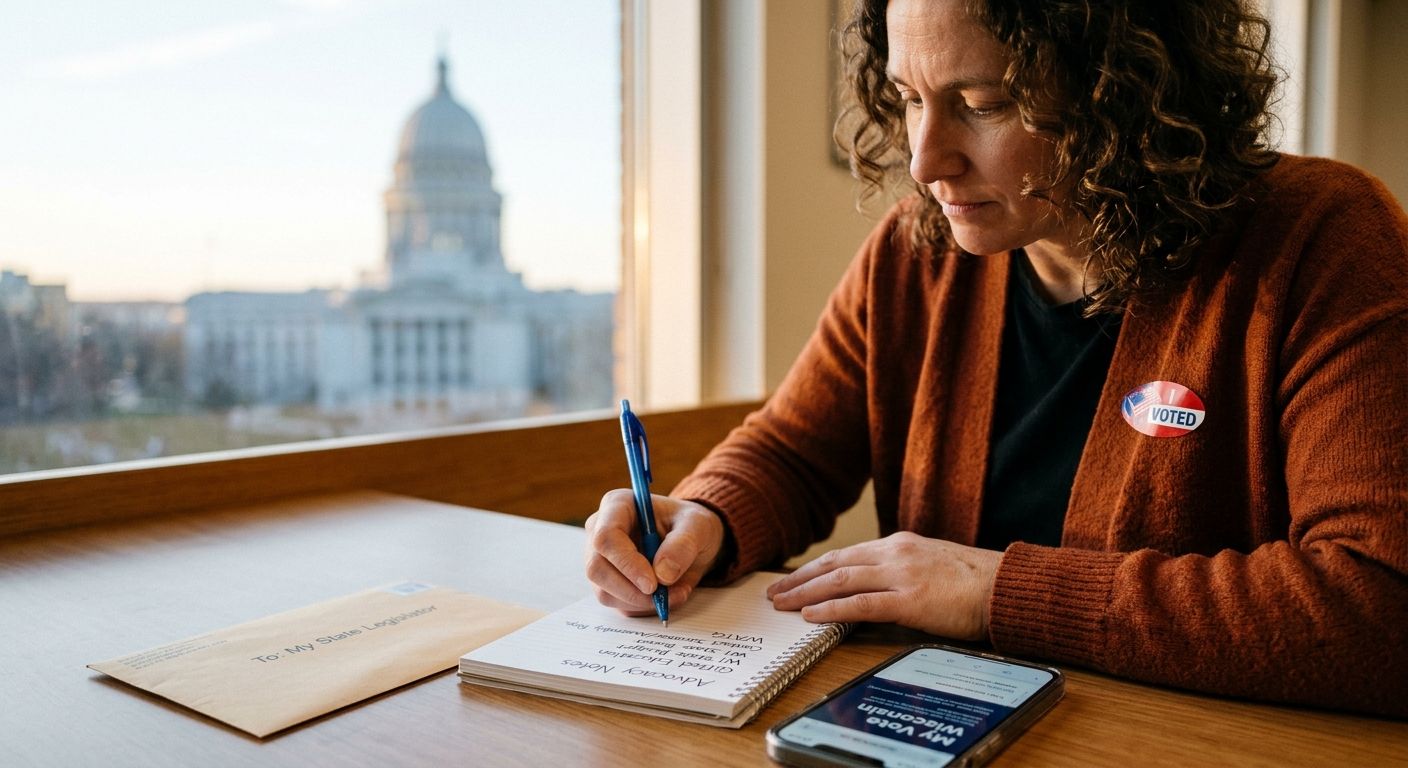
First of all, of course, if you are reading this on Tuesday, November 3, please vote! You can find your polling place, hours, and who's on the ballot by going to
My Vote Wisconsin and entering your home address. (You can also check to make sure that you are registered to vote at your current address. If you are not, you can register at your polling place on November 3 by showing proof of address.)
Public education is largely a state function, and the 132 legislators who serve in the Wisconsin Assembly (99) and Senate (33) make policy decisions that affect every student in Wisconsin. WATG advocates for advanced learners, tracking legislative action and testifying at hearings, but legislators are MOST responsive to their own constituents (because you can vote them in or out!). You can do a quick online search or visit the League of Women Voters website at
VOTE411 to investigate your candidates' positions on education.
After the election, make sure you know who is representing you! You can learn who holds those seats now from the legislature's website (go to
https://legis.wisconsin.gov and enter your home address under "Who Are My Legislators?"), but any newly elected legislators won't be posted right away during election week. If you watch election returns, you can learn who they are on Wednesday, November 4 (at least for races that are not incredibly close).
WATG monitors certain committees for actions that can affect gifted children and talent development: particularly the Senate and Assembly Education Committees, and during budget season (the first half of 2027), the Joint Committee on Finance. Committee members for 2027-2028 will be named this fall or early in 2027. Will your Assembly representative or Senator be on one of those committees? If so, it is extra important that you contact them, both to let them know your own (or your own child's) story, and to urge them to vote for (or against) bills that might help (or hurt) gifted children in Wisconsin. (WATG will publicize legislation to watch. Other committees to watch include those related to the economy and to higher education.)
The new two-year legislative session begins January 4, 2027, and one of their first orders of business will be to develop the budget that covers the period July 1, 2027 to June 30, 2029. This will include any funding for DPI's office of "Gifted and Talented Pupils," including grants for children's programming and teacher professional learning. The Joint Committee on Finance does most of the work on this, so if your Assembly member or Senator is on that committee, it is particularly important that they know what you consider important! (Wisconsin is at the bottom of the list of states that have any funding for gifted education.)
So, in short:
- Please vote for gifted-education-friendly candidates on November 3.
- Learn who your state legislators are for the new term, and watch for their committee assignments.
- Contact your legislators to let them know you care about appropriate challenge for advanced learners!
- If you are attending the NAGC conference in Milwaukee November 5-8 (or Parent Day Saturday, November 7), ask questions and let us know your concerns!
- Dr. Pam Clinkenbeard, WATG Board Members