

Gifted Learning Handouts and Guides

The Wisconsin Association for Talented and Gifted is proud to feature practical, downloadable tools designed to support high-ability and twice-exceptional learners both in the classroom and at home.
These handouts were developed by Wisconsin graduate students at the University of Wisconsin-Stevens Point as part of their professional preparation in gifted education. Grounded in current research, these free guides offer actionable strategies for teachers seeking differentiation ideas and parents looking for guidance on supporting their children's academic, social, and emotional growth.
Supporting Gifted and Talented Learners in Peer Relationships
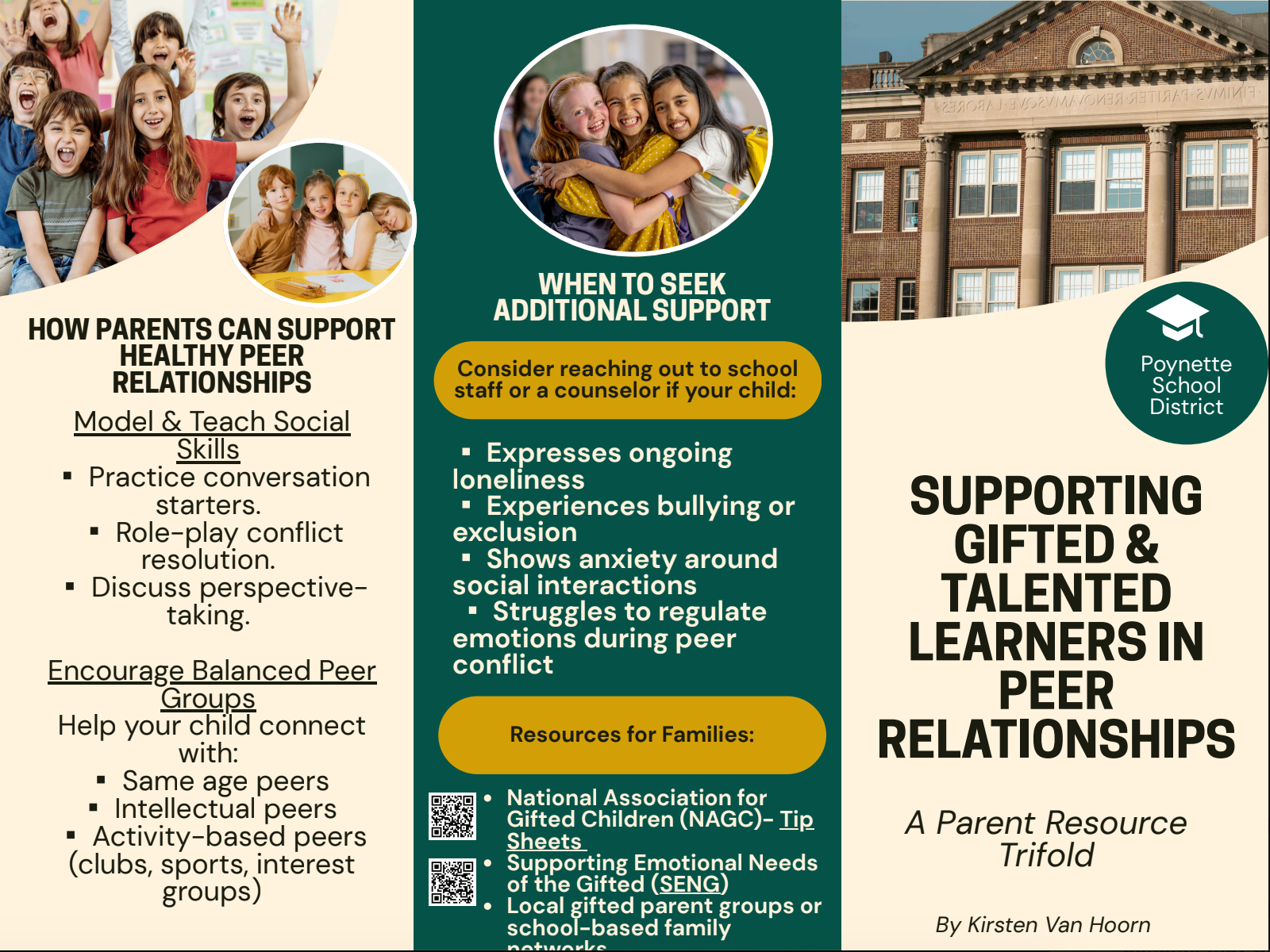
Created By: Kirsten Van Hoorn
Target Audience:
Parents and School Counselors/Educators
Summary:
Gifted learners often navigate social worlds that feel out of sync due to asynchronous development, intense emotional sensitivity, and niche interests. This resource trifold explores the unique social dynamics of high-ability students and provides clear tools to help them build healthy, meaningful connections.
What You'll Learn:
- How asynchronous development and heightened sensitivity impact everyday social interactions
- Common social challenges, including peer acceptance, masking, and balancing leadership vs. dominance
- How to help children connect with age-peers, intellectual peers, and activity-based peers
- Key warning signs indicating when to seek support from school counselors or specialists
Talent Development-Focused Classrooms and Homes
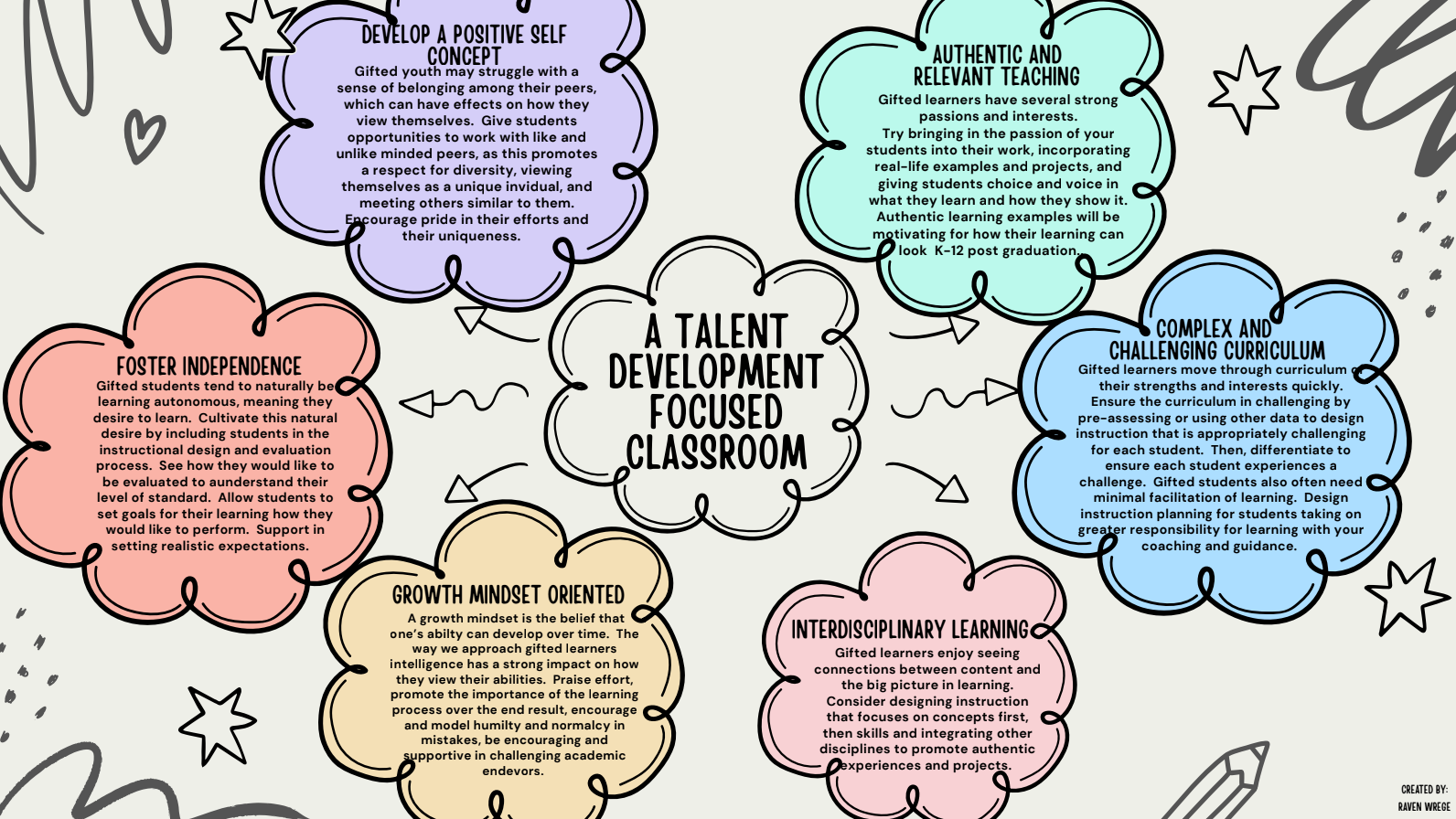
Created By: Raven Wrege
Target Audience:
Educators (Classroom Guide) and Parents (Home Guide)
Summary:
A dual-poster set offering practical framework strategies to transition from traditional learning to a talent-development approach. Featuring dedicated recommendations for both classroom educators and parents at home, these visual guides show how to nurture intrinsic motivation, independence, and self-confidence in gifted youth.
What You'll Learn:
- For Classrooms: Strategies for fostering autonomy, interdisciplinary project design, and pre-assessing for complex, challenging curriculum.
- For Homes: Practical ways to build resilience, cultivate growth mindsets, encourage niche interests, and connect youth with mentors.
Understanding Perfectionism in Your Gifted Child: From Pressure to Progress
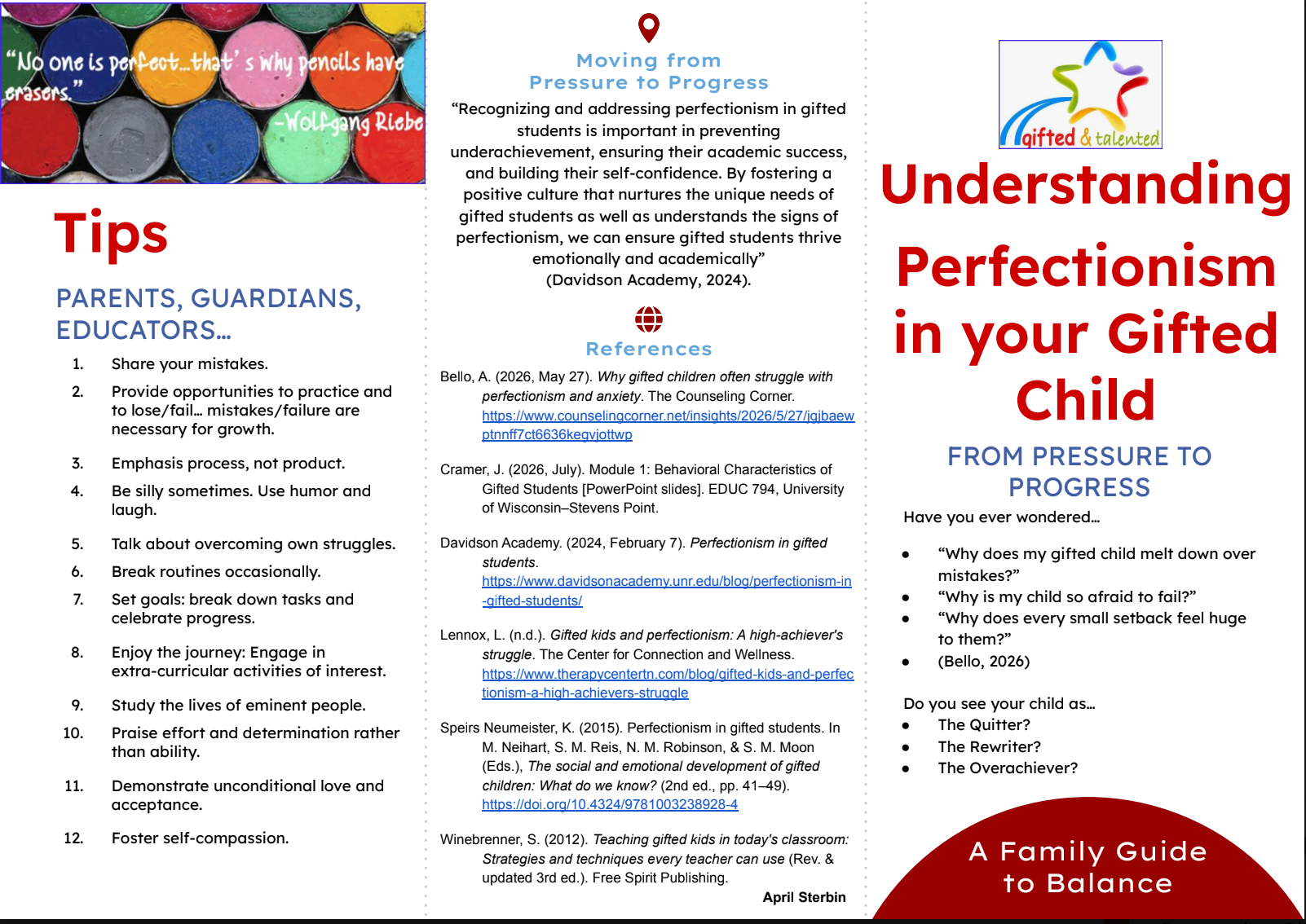
Created By: April Sterbin
Target Audience:
Parents, Caregivers, and K-12 Educators
Summary:
Why do gifted children sometimes melt down over small mistakes, procrastinate on assignments, or feel intense fear of failure? This comprehensive guide breaks down the two sides of perfectionism – adaptive growth mindsets versus maladaptive pressure – and outlines how environments and early learning experiences shape these tendencies.
What You'll Learn:
- How to spot the "red flags" of perfectionism (task avoidance, overgeneralizing failure, and physical stress)
- The role early educational challenge plays in fostering healthy attitudes toward mistakes
- 12 actionable, everyday tips for home and school to emphasize process over product and build self-compassion