Navigating the Intense Interest Cycles of Your Gifted Child

Jennifer Neuman • November 12, 2026

Share this article

Key Takeaways:

  • Asynchronous Development, Not a Flaw: Rapidly diving into a topic and discarding it is a natural result of quick cognitive processing and high curiosity – it satisfies an intellectual mystery rather than signaling a lack of perseverance.
  • Smart Budgeting Strategies: Protect your home from clutter and overspending by using a mandatory "Two-Week Rule" before buying equipment, leveraging libraries/swaps, and keeping a dedicated "Paused Projects Bin."
  • Spotting Avoidance vs. Moving On: Watch out for perfectionism. Gifted kids often walk away when a project requires genuine effort to protect their identity as being "smart" – parents can reframe these moments by praising effort over innate ability.

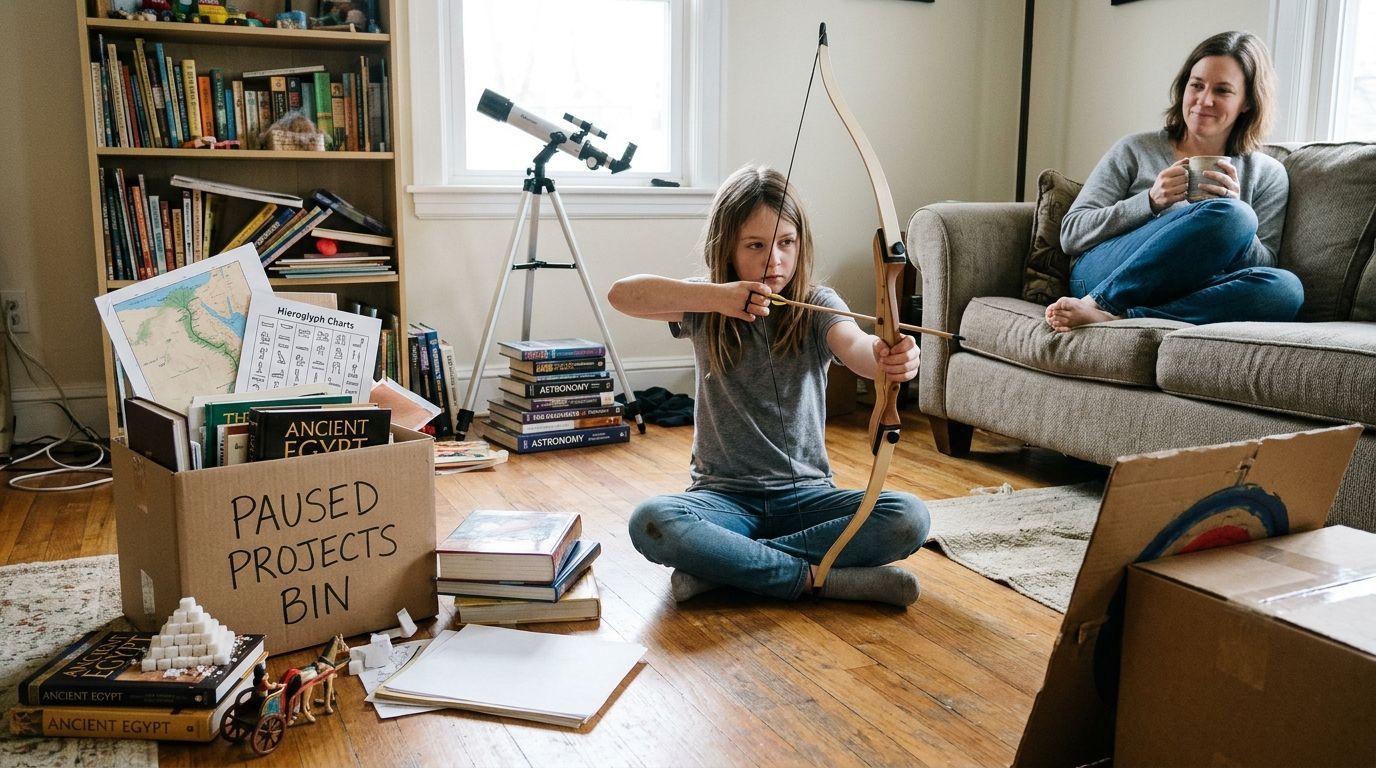
The living room floor is covered in maps of the Nile, charts of ancient pharaohs, and printouts of translated hieroglyphs. For three weeks, your child has eaten, slept, and breathed ancient Egypt. They have memorized the intricate steps of mummification and talked your ear off about the geometry of the pyramids. 


Then, on a random Wednesday, it stops. 


They shove the notes into a drawer; library books sit forgotten, replaced by a fixation on classical literature or competitive archery.


As a parent, watching this cycle repeat can be stressful. You worry your child lacks grit, perseverance, or the ability to stick to a long-term goal. If they drop everything the moment the novelty wears off, how will they ever finish a college degree or build a career? 


Before you panic, take a deep breath. This deep-dive-and-discard pattern is not a flaw. It is a normal part of asynchronous development. Once you understand why it happens, you can stop seeing it as an exhausting pattern and start seeing it as a strength.


The Science Behind the Hyper-Focus

Gifted children rarely explore hobbies passively. They consume them. This intensity comes from a mix of their ability to process information quickly and a constant need for mental stimulation. When a gifted brain latches onto a new topic, it attacks the challenge so fast it can make your head spin. 


The sudden drop in interest usually happens for one of two healthy reasons:

  • Once a child understands the foundational logic, rules, or mechanics of a topic, they've met their objective. They didn't want to be a lifelong archaeologist. They wanted to understand the cognitive mystery of how the historical pieces fit together.
  • A gifted child's brain often moves faster than their hands or their feelings. For example, they might completely understand how a pharaoh's tomb was built, but they lack the physical skill or patience to draw a flawless, detailed map of it. When their hands cannot keep up with their big ideas, they hit a wall and put the project on pause.


When their curiosity is satisfied, moving on is not a lack of focus. It is a fast-moving brain looking for the next challenge.


Funding the Focus (and Saving Your Sanity)

Supporting these intense, brief interests can lead to high costs and messy rooms. To protect your budget and peace of mind, have a plan that lets your child explore freely without treating every new curiosity as a permanent, lifelong commitment. 

  • Two-Week Rule: When your child begs for an expensive piece of equipment, validate their excitement but pause the purchase. Give it two weeks. If they are still tracking data, reading articles, and building with makeshift tools, then consider making a purchase.
  • Borrow, Rent, or Stream: Treat the library as your primary supply depot. Use local tool libraries, community swaps, or digital trial subscriptions. Buy student-grade or secondhand materials before purchasing professional-level equipment. 
  • Paused Projects Bin: Instead of letting abandoned passions pile up in the bedroom or common areas, create a single, designated storage container. When an interest is shelved, everything related to it goes in the bin. This keeps clutter under control and makes it easy for your child to find the materials if the spark comes back a year later. 


Spotting the Shift: Boredom vs. Avoidance OR Moving On vs. Giving Up

Most shifting interests are harmless, but parents need to watch for a sudden shift from healthy passion to perfectionism.


Because gifted children often coast through the early school years without trying, they start to believe being smart means doing everything effortlessly. The first time a hobby requires hard work, practice, or a steep learning curve, they suddenly feel like an imposter. 


If your child quits a project the exact moment it becomes difficult, they may not be bored. They might be terrified. Walking away lets them protect their identity as a "genius" so they do not have to face the messy possibility of failing.


Hit the Wall? What to Say vs. What Not to Say

What Not to Say What to Say Instead Why It Matters
But you're so smart, you'll figure this out in no time. This is the exact spot where the real learning starts. It's supposed to feel heavy right now. Praise effort and structure, not innate intelligence. Linking success to being smart makes struggle feel like a personal defect.
If you quit the second something gets hard, I'm never buying you gear again. It looks like you've reached a frustrating part of the process. Do you want to take a break or brainstorm a different way to try? Shaming builds defensiveness. Offering a structured pause or collaborative help keeps the door open to problem-solving.
Don't worry, let me just do that tricky part for you so you can finish. I can see this piece isn't fitting the way you want. Let's look at the instructions together and see where it got tangled. Swooping in to rescue them robs them of the chance to build frustration tolerance. Partner with them as a consultant, not a fixer.

Nurturing the Lifelong Learner

Our society values early specialization. Parents are often pushed to help their children pick a single lane, join competitive travel teams, or build a perfect résumé. But the world also needs scouts, generalists who can connect different fields, combine unique ideas, and adapt rapidly to new things. 


Your child's changing interests are not a character flaw. They are the training ground for a flexible, multi-faceted mind. 


Validating their need to explore, setting simple boundaries around time and money, and helping them push through the frustration of perfectionism is much bigger. You are teaching them how to learn without fear. 


This skill will last longer than any temporary obsession.


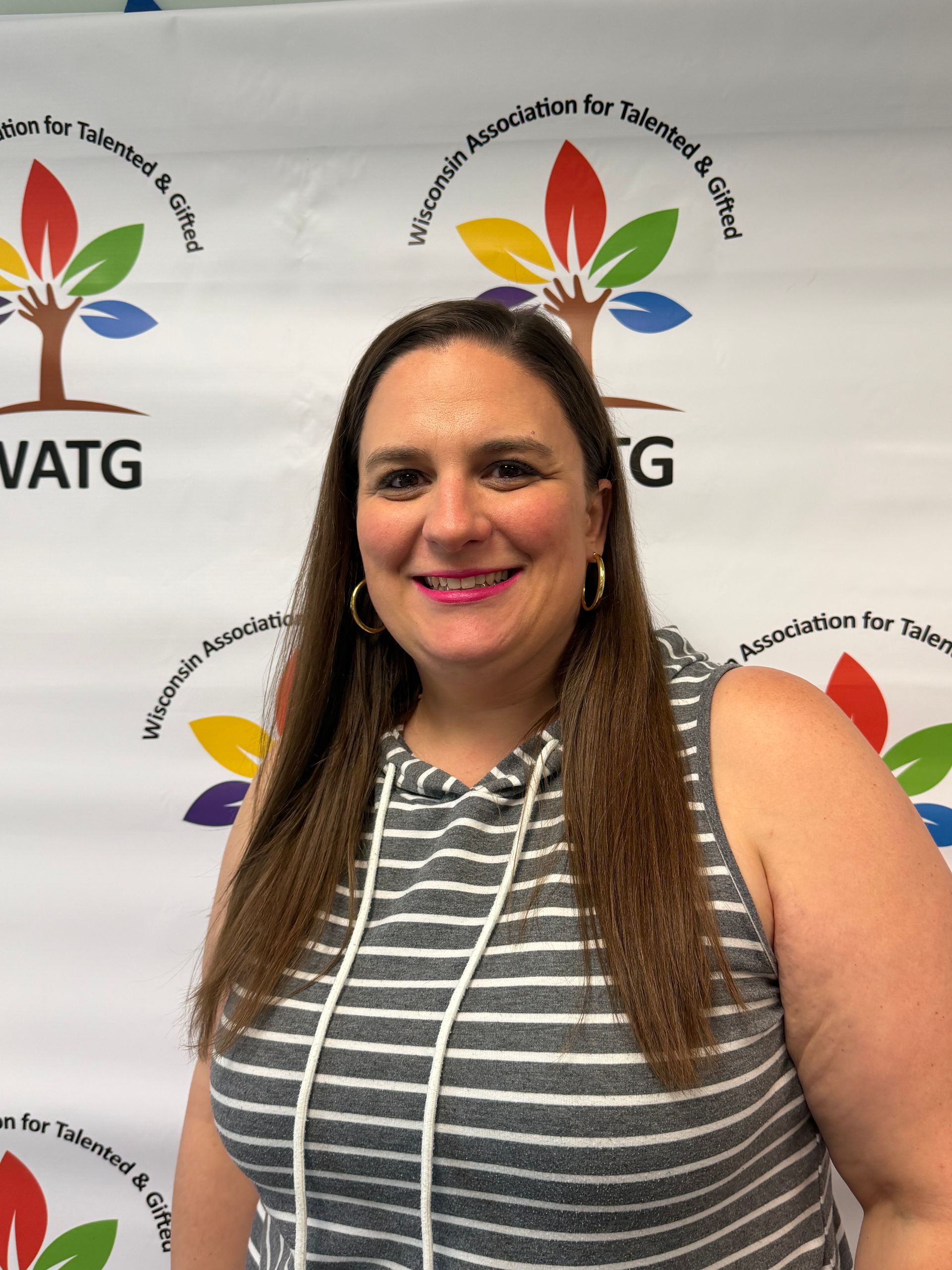
- Jennifer Neuman, WATG Secretary

Recent Posts

By Dr. Sara Bolster • November 3, 2026
Discover how to identify and support your gifted child's "spark." Dr. Sara Bolster shares practical tips for parents to nurture deep passions and curiosity.
By Michelle Burch • November 3, 2026
Discover how school administrators can recognize non-traditional student talents outside the classroom and connect high-potential learners to gifted services.
By Terese Weiler • November 3, 2026
Learn how Fond du Lac School District partnered with CAA to provide replacement-level ELA courses that challenge and engage advanced readers in grades 5–8.
By Pam Clinkenbeard • November 2, 2026
Learn how Wisconsin legislative decisions and upcoming budget sessions impact gifted education funding, and find out how to advocate for advanced learners.
By Jackie Drummer • October 5, 2026
Discover best practices for gifted identification in Wisconsin, including universal screening, local norms, multiple measures, and parental participation.
By Raj Peddapati • October 2, 2026
Explore how a student-led Rubik’s Cube Club builds resilience, healthy risk-taking, and leadership skills in young learners beyond classroom instruction.
By Lance Thompson • October 2, 2026
Learn how partnering proactively with your district's Gifted & Talented Coordinator opens doors to enrichment, state resources, and tailored student support.
By Mary Ann Hudziak • September 29, 2026
Discover how data-informed questions and targeted screeners help identify gifted potential, reduce bias, and support diverse learners beyond test scores.
By Laura Mukerji • September 11, 2026
Discover how early enrichment opportunities and museum visits help shape student identity, boost academic confidence, and drive long-term talent development.
By Dr. Sara Bolster • September 10, 2026
Discover key traits to identify gifted and twice-exceptional learners in September by observing curiosity, creative problem-solving, and non-traditional strengths.
Show More