At the start of the new year, we have all the promise of new students, new initiatives, new goals, and exciting educational adventures. With all of the new, sometimes our tried and true ways to challenge gifted and talented students, such as through differentiation, dim amongst the glittery new initiatives. Whether new to meeting the needs of gifted students or a veteran coach supporting the efforts of teachers, it's helpful to remember the basics of differentiation and how it can be used to best meet the needs of our students.
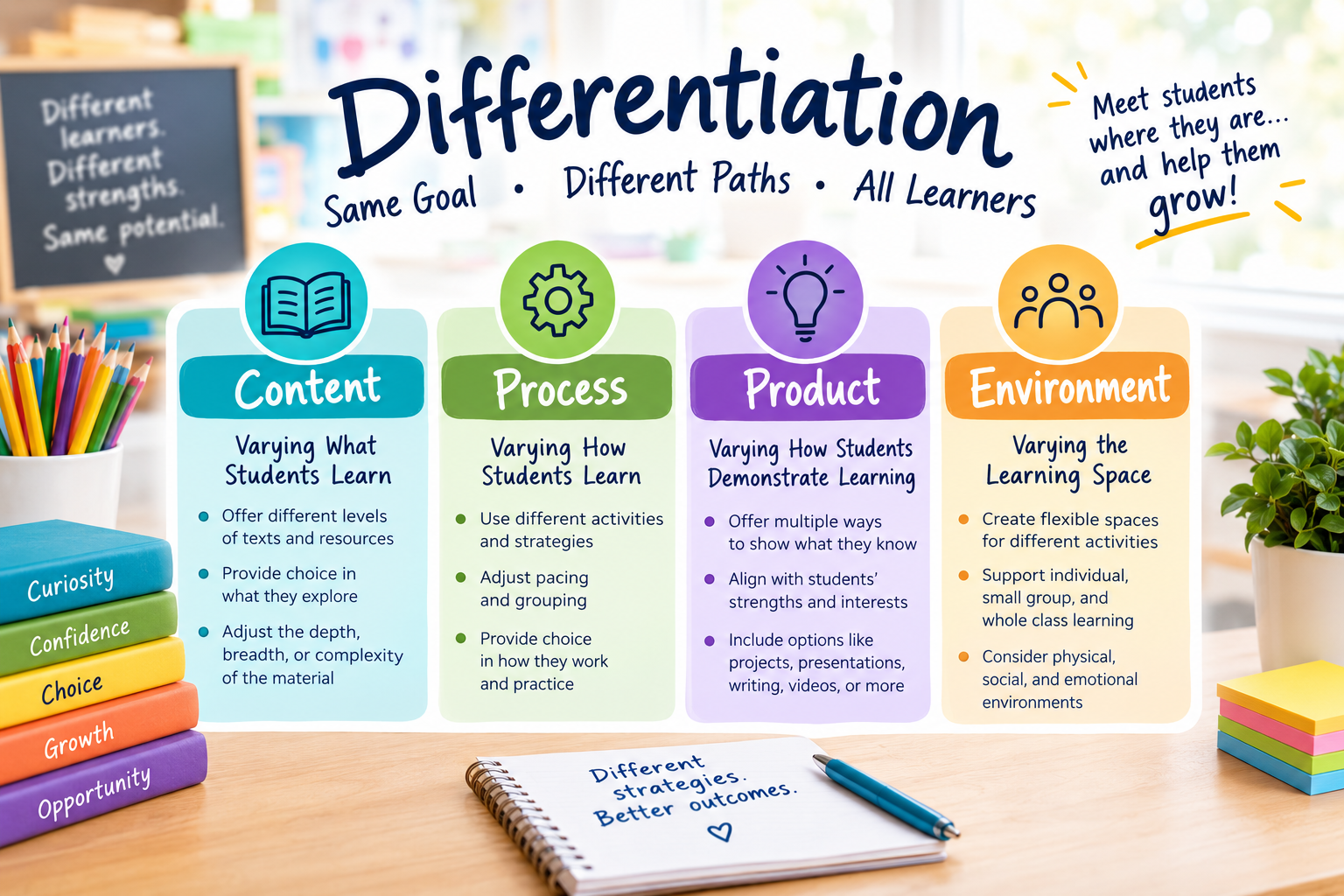
Classrooms are filled with students of differing abilities, talents, and interests. Through the thoughtful use of differentiation, teachers seek to meet the needs of all the students in their classroom by varying different aspects of the instruction from content, process, product, and environment. That easily written sentence belies the challenges of differentiation. Let’s take a closer look at each element and how it can be varied. But first…
All good implementation of differentiation strategies begins first with knowing the students and where they need to be challenged to continue to develop as a learner. Plan for differentiation strategies based on collected data. Avoid taking a scatter shot approach that assumes providing a variety of levels will hopefully challenge everyone. As educators, we collect an enormous amount of data. Use that data to determine appropriate instruction. What data you have access to will vary based on level, subject, and district. Unit pretesting data is often available for math and science units. Reading records will provide information on appropriate challenges for ELA and Social Studies. Interest surveys can prove incredibly useful in all subject areas. Schoolwide assessments, such as MAP and STAR tests, provide a wealth of data. Personal oral communications in areas such as social studies and science can provide valuable information.
Content: Varying What Students Learn
Varying the content in a unit or lesson challenges and engages students at their appropriate level.
- English Language Arts Example: When embarking on a class novel, students who demonstrate ability and/or interest to go further can read a higher level version of the text (if available), or dive into provided supplementary nonfiction texts at a variety of levels to challenge them and further develop background knowledge.
- Science Example: Students pretest before a unit on the laws of motion. Students who demonstrate mastery of the standards to be covered participate in a less messy egg drop experiment where they use accelerometers, coding, and their understanding of the laws of motion to recreate the old egg drop experiment without an egg.
Process: Varying How Students Learn
This aspect focuses on the activities in which students take part to make sense of or master the content.
- Math Example: Using unit pretest data, develop learning pathways for all students to ensure each student moves forward at their own pace. Based on data, students are excused from lessons in which they have shown mastery. They use that time to work on an extension activity pathway that provides exposure to higher level standards and offers them choices in their assignments.
- World Language Example: Students who demonstrate mastery of upcoming lessons or an entire unit are excused from the mastered lessons and develop a written piece in the language being studied which extends their learning.
Product: Varying How Students Demonstrate Learning
Allow students to show mastery of their learning in a variety of ways that align with their strengths.
- Social Studies Example: All students complete extensive research projects and have a choice as to how to present their historical argument. Choices include exhibits, videos, websites, performances, papers, etc.
- English Language Arts Example: Students who demonstrate mastery of grade level persuasive writing standards are given the opportunity to share their persuasive arguments through a podcast which can be submitted to a national contest rather than write the assigned class essay.
Environment: Varying the Learning Space
Vary the learning environment to allow for a variety of groupings and activities that support different learning styles.
- All Classrooms: Create spaces in the classroom that allow for the variety of planned differentiation activities. In addition to a whole class instruction area, include small group and individual work areas.
- English Language Arts Example: In the persuasive writing unit above, include a breakout space for pillow fort construction with blankets and pillows so students can create makeshift recording studios. Don't let the fun activity fool you: pillow forts make excellent recording studios!
Differentiation is a powerful tool to provide appropriate levels of challenges to all students in our classrooms and schools. By thoughtfully using data analysis to vary content, process, product, and environment, we engage and challenge students to continue to grow at their educational levels.
- Kris Lockhart, WATG Board Member