"It's eleven o'clock at night. Your defense is tomorrow. Why aren't you writing?"
My voice has the sharp, tight edge of a mother's panic. I'm standing behind my sixteen-year-old son, watching him stare at a laptop displaying a blank document. His final inquiry project is due tomorrow, and instead of writing, he is completely engrossed in a YouTube video explaining quantum computing, qubits, and superposition. To anyone else, it looks like procrastination, but I'm not just his mother. I'm also a special education and gifted education teacher. When I stop lecturing and take a breath, I don't see a lazy teen refusing to work. I see a bright mind trapped in anxiety.
Looming over that blank document is senior year and college admissions. I'm wondering whether he'll be able to function independently if a high school project leaves him frozen. He's wondering something even more frightening:
What if everyone discovers I was never as smart as they thought?
For his whole life, school came easily. He rarely needed to study, take notes, or push through material that didn't make immediate sense. Academic success wasn't something he achieved. It was simply who he was. This semester-long inquiry project requires sustained effort, organization, self-regulation, and a tolerance for being temporarily stuck, skills he is still struggling to develop, but needs for success in college. Instead of writing, he escapes into a YouTube video.
Gifted students often grow up believing that if they're truly smart, work should never be difficult. When school finally demands sustained effort, that struggle feels less like learning and more like evidence that they were never gifted in the first place. For students with generalized anxiety disorder, that belief becomes even more powerful.
To an outsider, task avoidance looks like a lack of motivation. As both a parent and an educator, I know it's an attempt to regulate overwhelming emotions. Every anxious reminder I give,
"It's due tomorrow!", confirms his deepest fear that he's about to disappoint everyone. His nervous system does what anxious brains often do. It freezes. The quantum computing videos aren't just entertainment; they're refuge.
This realization forced me to change my approach. If my goal is to prepare him for college, I can't motivate him through panic. I have to teach him how to move through cognitive friction.
The Parent-Educator Toolkit
At 11:05 pm, hovering behind him, looking at his blank screen and the video on his phone, I had a choice. I could keep playing the frantic, nagging mom and drive his nervous system deeper into a paralyzing freeze, or I could step back and put on my teacher hat. If my goal is to prepare him for college independence, I couldn't force compliance through a shouting match. I had to teach him how to navigate cognitive friction on his own.
I let go of the panic and deployed a three-step scaffolding blueprint designed to build long-term autonomy.
Step 1: De-escalate and Validate
Before he can think, his nervous system has to feel safe. I sit beside him, lower my voice, and stop being the frantic mother.
- Strategy in Action:
I ignore the phone in his hand and say,
"I'm turning off the nagging mom mode now. I see you watching the quantum computing video, and I know it's because looking at the blank document feels terrifying. You're worried the project won't be perfect, and you're worried that means you won't survive college. I get it. It's a lot of pressure, and it makes sense that your brain wants to hide from it."
- The College-Prep Goal:
By naming his imposter syndrome and college fears, I strip them of some of their power. He learns that avoidance is an emotional reaction to fear, not evidence that he lacks ability.
Step 2: Micro-Step the Unfamiliar
Because learning has come so easily, many gifted students haven't had to develop the executive functioning skills needed for long-term, independent work. An inquiry project feels like an insurmountable mountain instead of a series of manageable steps.
- Strategy in Action:
I don't ask him to finish the project. I ask him to close YouTube and open his presentation. Then, I give him a microscopic goal:
"Don't worry about the whole presentation. Let's just type a bulleted list of things you learned during your research. Just three bullet points, and then you can stop."
- The College-Prep Goal:
This teaches structural scaffolding. In college, no one will break large assignments into manageable pieces for him. By practicing micro-steps now, he learns how to start even when he feels overwhelmed.
Step 3: Use Body Doubling and Normalize the "Garbage Draft"
Anxious perfectionists freeze because they think their first attempt must be flawless. I have to teach him that real learning is messy.
- Strategy in Action:
I grab my laptop and quietly work beside him, practicing the special education strategy known as body doubling. My calm, working presence anchors his franticness. I tell him,
"Write a garbage slide. Use typos. Use slang. Make it completely messy. Just get your ideas onto the page. We'll edit it later."
- College-Prep Goal:
This separates his identity from his first draft. He starts to understand that intellectual work is iterative. Encountering difficulty doesn't mean he's an imposter. It means he is doing the real work of learning.
The blue light of the phone screen finally goes dark. The heavy sighs become steady typing. The blank page begins to fill. Watching him that night reminded me that our job as parents and educators isn’t to produce flawless transcripts, frictionless academic pathways, or a shiny, unbroken streak of effortless success. It's to help them develop resilience before life demands it.
It's easy to love a child's potential. It's harder and far more important to love them through the paralysis that their potential can create.
As another school year approaches and college grows closer, I'm reminding myself that our children don't need us to protect them from struggle. They need us to teach them that their worth has never depended on a single assignment, grade, or performance. When we separate identity from achievement, we loosen anxiety's grip. Perhaps this is the greatest graduation gift we can give our gifted students: the courage to begin, the resilience to stumble, and the confidence to keep moving forward.
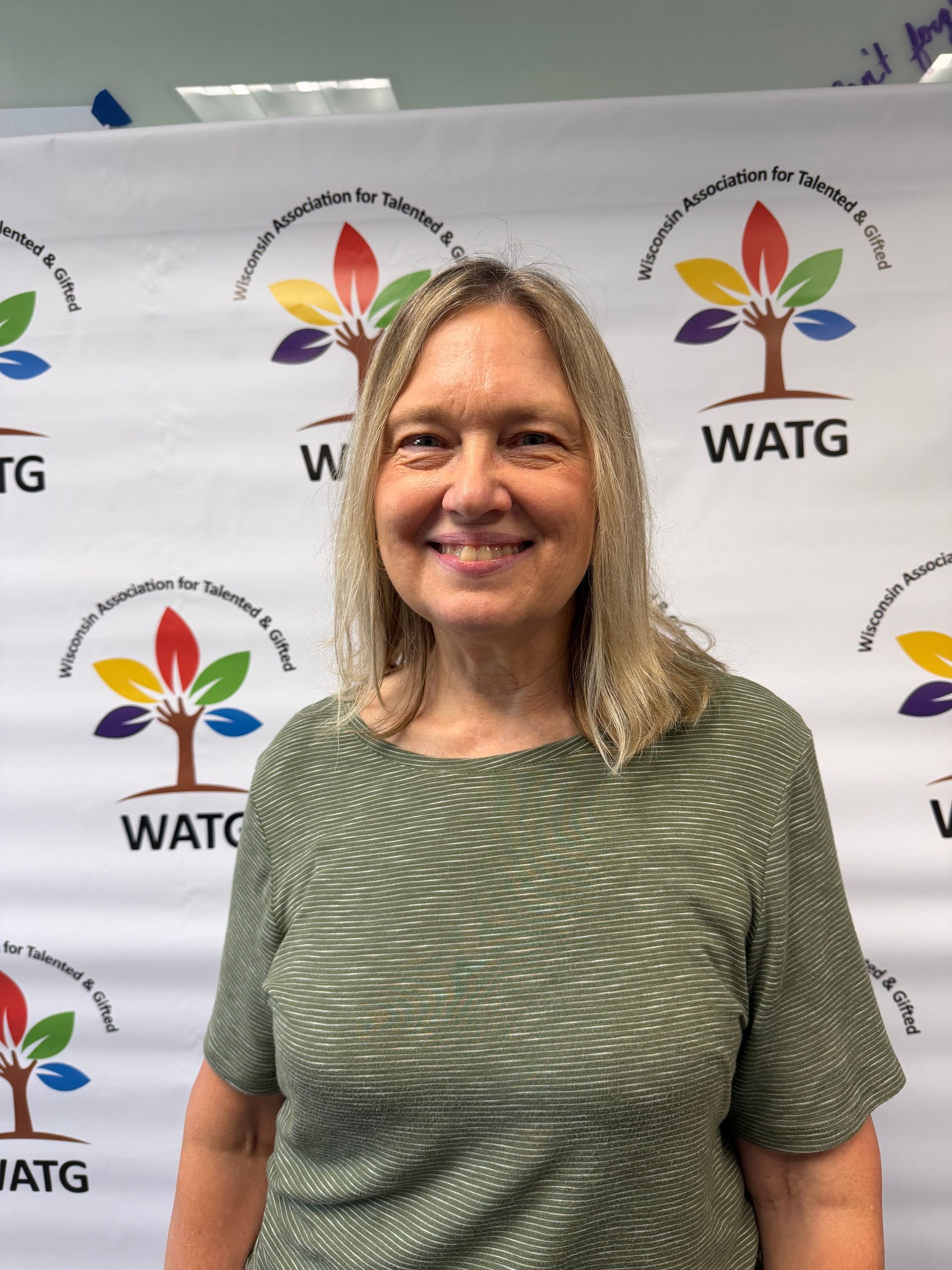
- Jen Neuman, WATG Board Director
Thank you to Kristen Eiswerth for the translation of this article for our Spanish-speaking educators and families.