
Honoring the Rights of Gifted Learners Then and Now

Jenna Cramer • March 20, 2026

Share this article

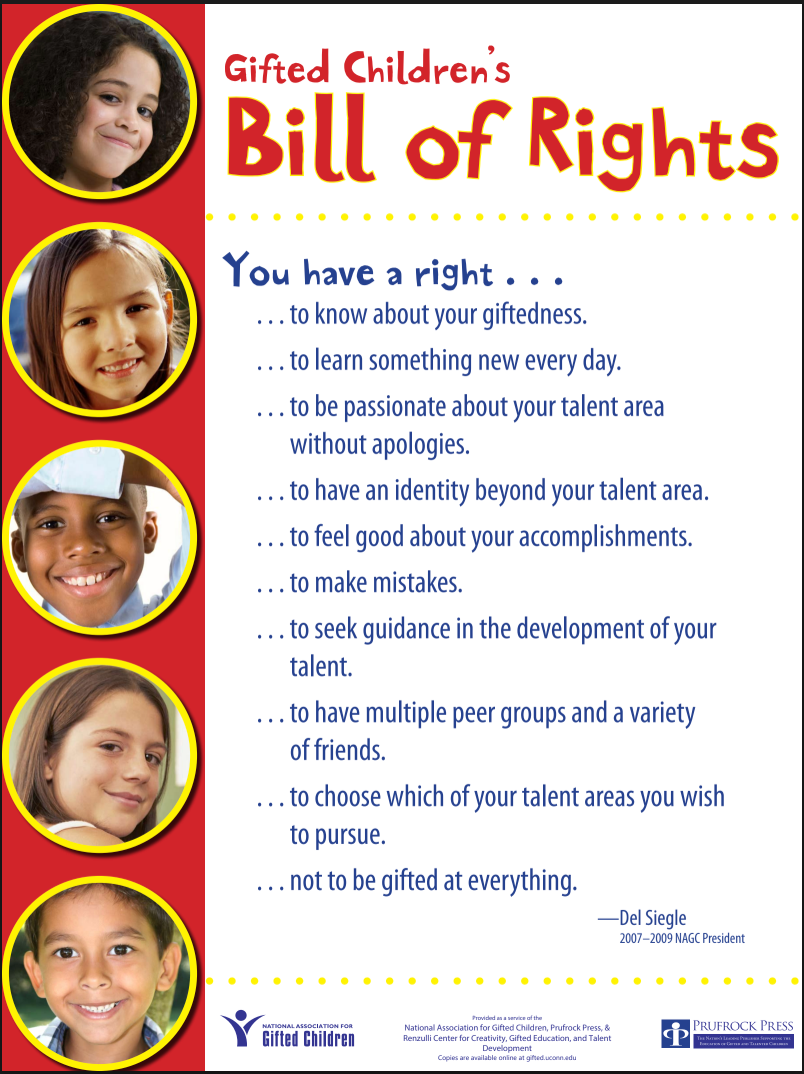
Early in my educational career, I stumbled upon a simple but powerful document, The Gifted Children’s Bill of Rights. At the time, I did not realize just how foundational it would become in shaping my work as an educator, parent, and advocate for gifted students. Over the years, I have returned to it again and again as both a compass and a reminder of why gifted education matters.


The Gifted Children’s Bill of Rights outlines what gifted learners deserve, not as privileges, but as fundamental rights. The right to know about their giftedness. They deserve these rights, among others: 

  • The right to learn something new every day. 
  • The right to be passionate without apologies. 
  • The right to make mistakes. 
  • The right to not be gifted at everything.


Authored by Del Siegle and shared by the National Association for Gifted Children, this document captures the academic, social, and emotional complexity of gifted learners in a way few resources do.


What struck me then, and continues to resonate now, is how deeply human these rights are. They challenge the persistent myths that gifted students will be fine on their own, that learning should always come easily, or that strength in one area means support is unnecessary in others. Instead, The Gifted Children’s Bill of Rights reminds us that gifted learners need guidance, challenge, belonging, and understanding, just like every other child.


This document has quietly informed many of my professional decisions over the years. It shapes how I design learning experiences, how I engage with families, how I prepare educators, and how I advocate at the classroom, district, and policy levels. When I pause to ask whether our practices are truly serving gifted students, I often return to these rights. Are we honoring students’ identities beyond their talents? Are we allowing space for risk taking and growth? Are we providing opportunities to learn something new every day?


As we continue our collective work in gifted education, I encourage you to revisit the Gifted Children’s Bill of Rights, or read it for the first time with fresh eyes. It is more than a poster or handout. It is a call to action. For me, it remains a steady foundation for advocating that gifted learners are seen, supported, and challenged in ways that honor who they are and who they are becoming.


Thank you for being part of this important work and for continuing to champion the needs of gifted students in your own local contexts. I encourage you to share The Gifted Children’s Bill of Rights with a colleague or administrator who would appreciate these ideas. Use this as a springboard to invite them to the National Association for Gifted Children’s 2026 Annual Convention which we are hosting in Milwaukee, Wisconsin on November 5 through 8, 2026. This national conference is a tremendous opportunity to connect, learn, and grow with others who are passionate about serving gifted learners.


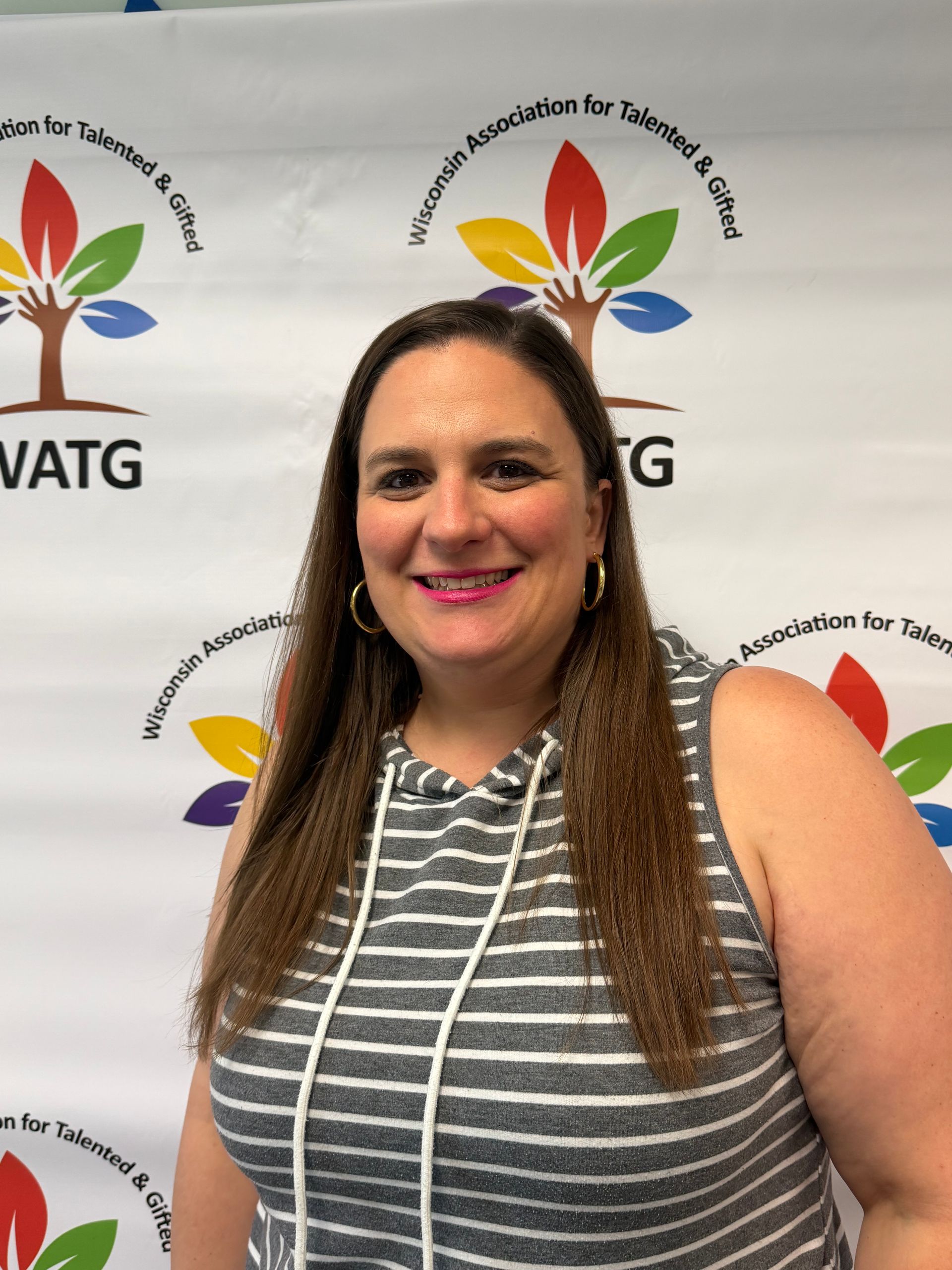
- Dr. Jenna Cramer, WATG Board of Directors


References: Siegle, D. (2009). Gifted children’s bill of rights. National Association for Gifted Children. 

Recent Posts

By Jackie Drummer March 20, 2026
This post explores sleep challenges in gifted children and offers simple strategies to support healthy routines and improve rest and overall well-being.
By Laura Mukerji March 10, 2026
This explains why depth of learning is just as important as speed for advanced learners & provides practical examples to increase complexity within existing lessons.
By Nikki Radcliffe March 10, 2026
Explains six gifted learner profiles and how recognizing them helps educators and parents better support diverse academic and social-emotional needs.
By Jessica Barrington February 23, 2026
After Wisconsin students are identified as gifted, schools must provide differentiated, culturally responsive programming and build student self-advocacy skills.
By Jackie Drummer February 23, 2026
Research on gifted talent development shows early prodigies rarely become elite adults; exploration and delayed specialization may better support long-term success.
February 9, 2026
This post explains why IB programs fit gifted learners, fostering curiosity, depth, and social-emotional growth while encouraging exploration in WI.
By Amy Stenzel February 9, 2026
WATG Summer Scholarships support Wisconsin gifted students in STEM, arts, leadership, and academics. Apply by April 1, 2026!
By Michelle Burch February 9, 2026
This article urges educators, families, and policymakers to protect challenge, equity, and growth for Wisconsin's gifted learners.
January 26, 2026
Annie’s story shows how giftedness can be hidden by boredom and social pressure, and why relationships matter in recognizing unique strengths in gifted learners.
By Jackie Drummer January 20, 2026
This article explores how gifted learners build well-being through creativity, resilience, & mindfulness, offering research-based insights for parents and educators.
Show More